Javascript 继承的多种方式
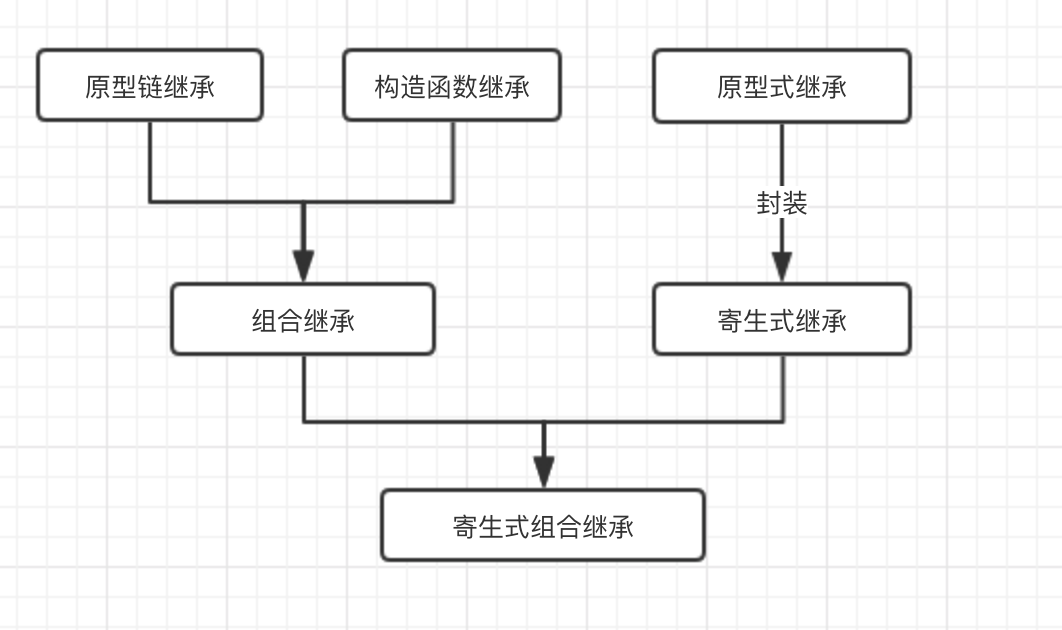
实现 js 继承的方式有以下几种:
- 原型链继承
- 构造函数继承
- 组合继承
- 原型式继承
- 寄生式继承
- 寄生式 + 组合(完美继承)
原型链继承
原型链是指每个构造函数都有一个 prototype 属性,该属性指向一个对象,而通过该构造函数创建的实例的原型,就是该对象。那么基于原型链的继承,可以用下列方式来实现:
1
2
3
4
5
6
7
8
9
10
11
| const Parent = function () {
this.say = function () {
console.log("I'm parent.");
};
};
const Child = function () {};
const extend = function (ChildClass, SuperClass) {
ChildClass.prototype = new SuperClass();
};
extend(Child, Parent);
const childInstance = new Child();
|
优点:
- 子类的实例沿着原型链可以访问父类的方法或属性,同时能通过
instanceof的检测
缺点:
- 子类无法传递参数给父类
- 父类引用类型的属性会被所有子类的实例共享
构造函数继承
主要是借助call或apply实现,然后把子类的this指针传入。
1
2
3
4
5
6
7
8
9
| const Parent = function (name) {
this.say = function () {
console.log("I'm " + name + '.');
};
};
const Child = function () {
Parent.apply(this, arguments);
};
const childInstance = new Child('child');
|
优点:
- 支持传递参数给父类
- 父类引用类型的属性不会被所有子类的实例共享
缺点:
组合继承
既然原型链继承与构造函数继承各有优缺点,那么我们整合它们的优势,于是就有组合继承这种方式:
1
2
3
4
5
6
7
8
9
10
11
12
13
14
15
16
17
18
19
20
21
22
| const Parent = function (name) {
this.skills = ['tennis', 'football'];
this.say = function () {
console.log("I'm " + name + '.');
};
this.addSkills = function (skill) {
this.skills.push(skill);
};
};
const Child = function () {
Parent.apply(this, arguments);
};
const extend = function (ChildClass, SuperClass) {
ChildClass.prototype = new SuperClass();
};
extend(Child, Parent);
const childInstance1 = new Child('child1');
const childInstance2 = new Child('child2');
childInstance2.addSkills('basketball');
console.log(childInstance1.skills);
console.log(childInstance2.skills);
console.log(childInstance1 instanceof Parent);
|
但是这种方式仍然有不足的地方:
- 实现每个子类的继承,父类都会被调用两次,如果父类的实现很复杂的话,会造成消耗问题。
另外,这里或许有人会疑惑,好像ChildClass.prototype = SuperClass.prototype也可以实现。但是会有个问题,在ChildClass.prototype上增强方法时,也会添加到父类的 prototype,而实例化父类则不用有这种问题(这里需要理解在 js 中,new 做了什么事情)。
原型式继承
原型式继承利用传入的对象作为创建的对象的原型,主要用到了Object.create这个方法,其内部的实现也可以用 es5 去模拟,但是还是存在一些区别(可以去另外一篇文章了解):
1
2
3
4
5
6
7
8
9
10
11
| const createObject = function(o) {
const F = function() {}
F.prototype = o;
return new F();
};
const parent = {
say: function() {
console.log("I'm parent.");
}
}
const child = createObject(parent));
|
缺点:
- 子类无法传递参数给父类
- 本质上是实现浅复制,父类对象的引用类型的属性会被子类共享
寄生式继承
简单来说其实是原型式继承实现的封装,并不是什么继承。并可以增强子类的属性或方法。
1
2
3
4
5
6
7
8
9
10
11
| const createObject = function (o) {
const F = function () {};
F.prototype = o;
return new F();
};
const extend = function (o) {
const obj = createObject(o);
obj.play = function () {};
return obj;
};
|
缺点跟原型式一样
寄生组合式继承(完美继承):
我们知道,组合式继承已经近乎完美了,只是在实现继承时,会调用两次父类,因此可以组合这两种方式。React 就是继承就是使用这种方式。
1
2
3
4
5
6
7
8
9
10
11
12
13
14
15
16
17
18
19
20
21
22
23
24
25
26
27
28
29
30
31
32
33
34
35
36
37
| const Parent = function (name) {
this.skills = ['tennis', 'football'];
this.say = function () {
console.log("I'm " + name + '.');
};
this.addSkills = function (skill) {
this.skills.push(skill);
};
};
const Child = function () {
Parent.apply(this, arguments);
};
const createObject = function (o) {
if (typeof Object.create === 'function') {
return Object.create(o);
} else {
const F = function () {};
F.prototype = o;
return new F();
}
};
const extend = function (child, SuperClass) {
const prototype = createObject(SuperClass.prototype);
child.prototype = prototype;
child.constructor = SuperClass;
};
extend(Child, Parent);
const childInstance1 = new Child('child1');
const childInstance2 = new Child('child2');
childInstance2.addSkills('basketball');
console.log(childInstance1.skills);
console.log(childInstance2.skills);
console.log(childInstance1 instanceof Parent);
|
[本文谢绝转载,谢谢]